
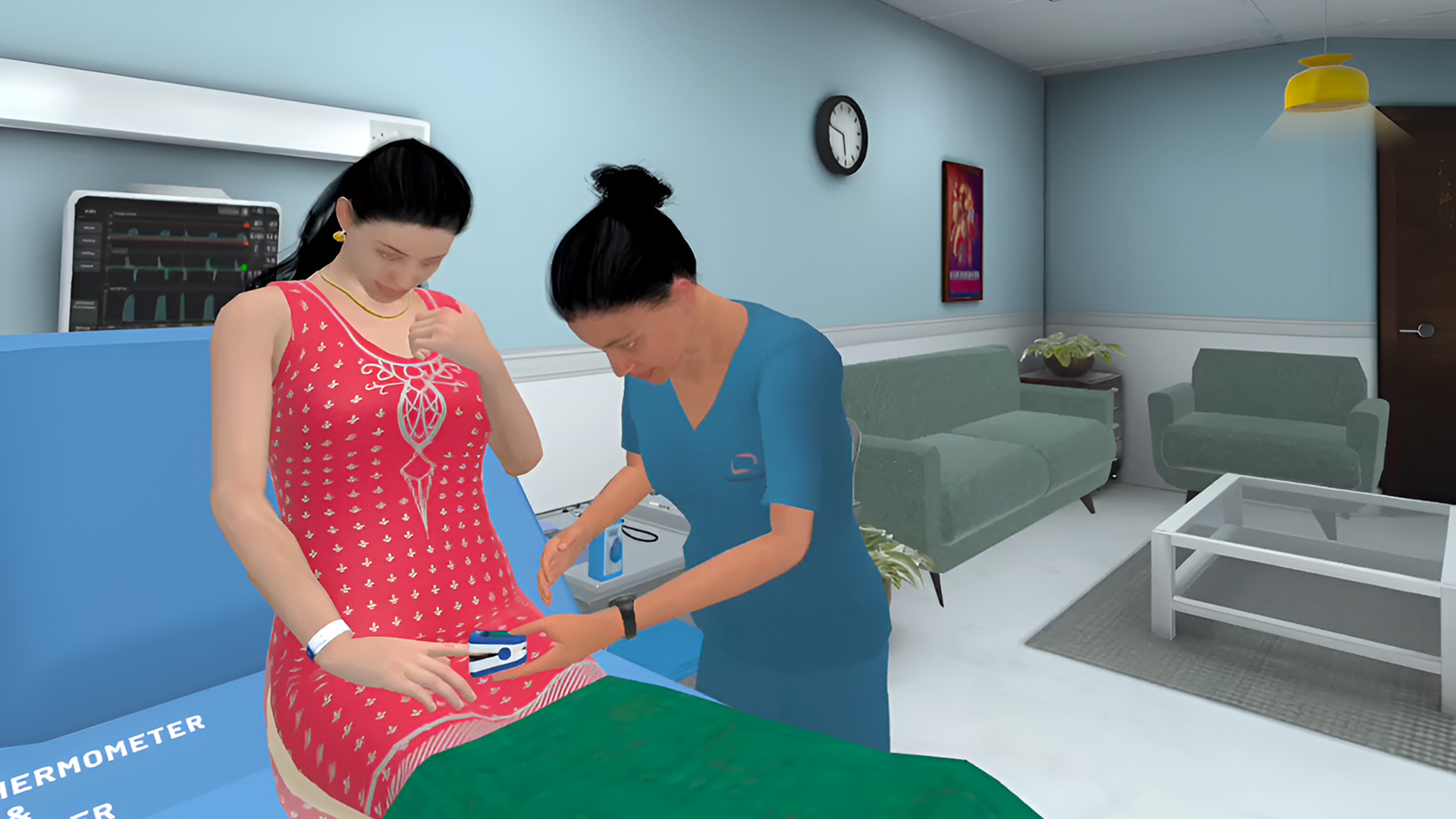
Vital Signs Training_ Interpreting the Language of the Body
Vital signs are the first whispers of the body when something’s wrong. Subtle changes in temperature, pulse, respiration, and blood pressure can be the earliest indicators of illness, deterioration, or emergency.
In clinical practice, knowing what to record isn’t enough. Healthcare professionals must know how to interpret the data, connect the dots, and respond swiftly. That’s why vital signs training is not just foundational—it’s critical.
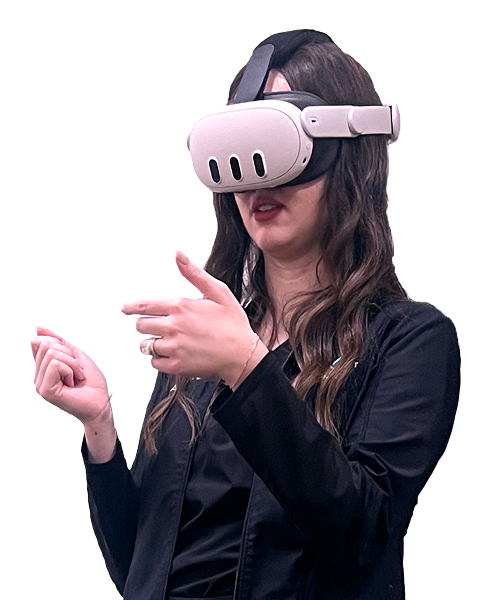
At ImmersiveQuest, we go beyond theory. We offer immersive VR simulations that bring vital signs to life, helping learners understand that these numbers are not just data—they’re a language the body uses to speak.
More Than Just Numbers on a Chart
Let’s be honest: taking vital signs can sometimes feel like a mechanical task. But behind those numbers are clues to:
- Dehydration
- Shock
- Infection
- Heart failure
- Hypoxia
- Sepsis
- Internal bleeding
A slightly elevated pulse with shallow breathing and a mild temperature spike? That could mean sepsis is setting in. A low BP with a high pulse in a post-op patient? Could be internal bleeding. These insights are missed when vital signs are reduced to just a checklist.
Training students to interpret signs, not just measure them, is what sets apart good nurses from great ones.
Common Gaps in Traditional Vital Signs Training
Despite being an essential clinical skill, vital signs training in most traditional curricula is often:
- Rushed or reduced to a demo
- Focused on technique, not context
- Detached from real-time decision-making
- Lacking in simulated complexity or variations
The result? Many students can perform the task, but few feel confident enough to assess what those signs actually mean in different clinical contexts.
How Immersive VR Changes the Game
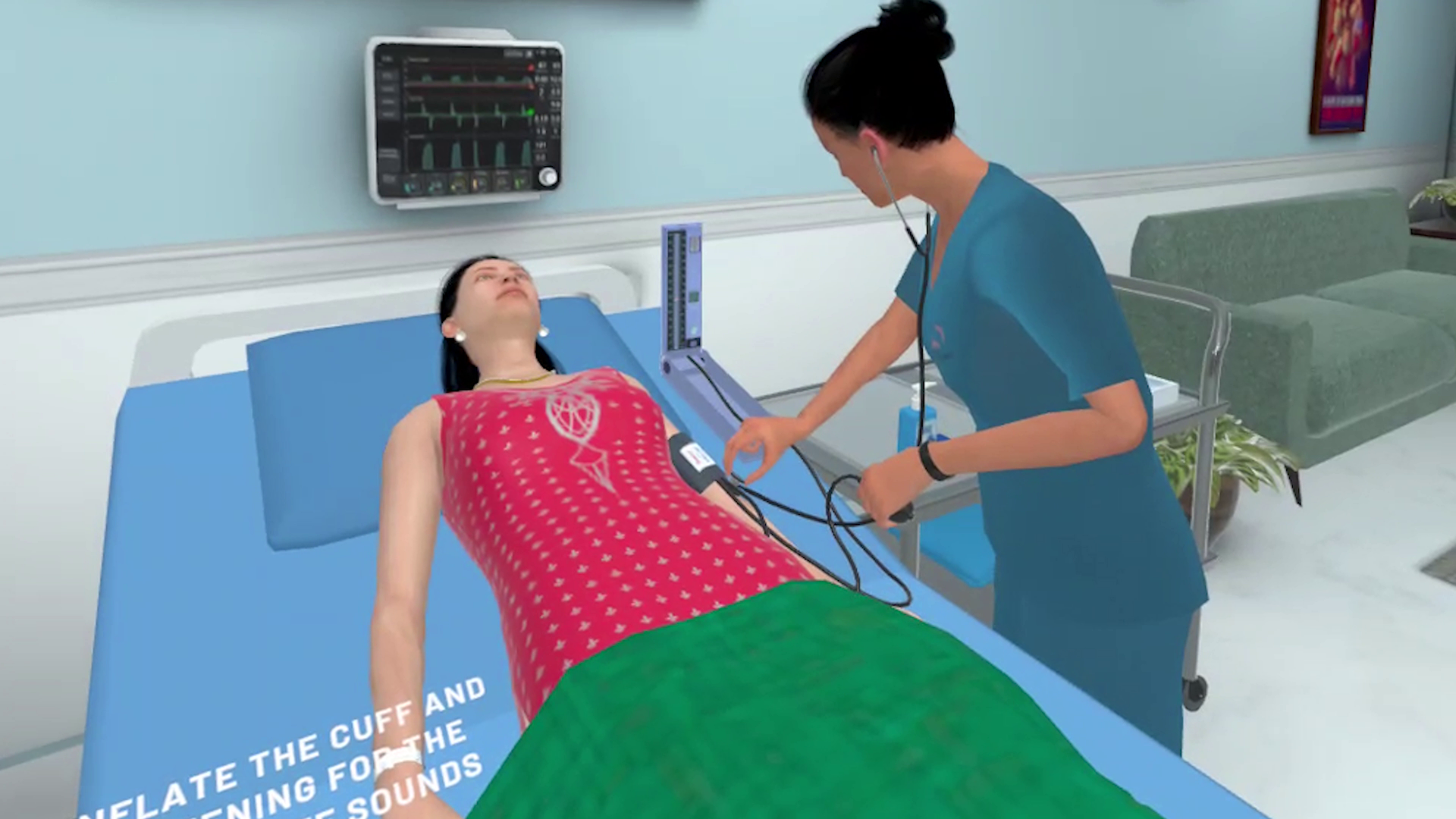
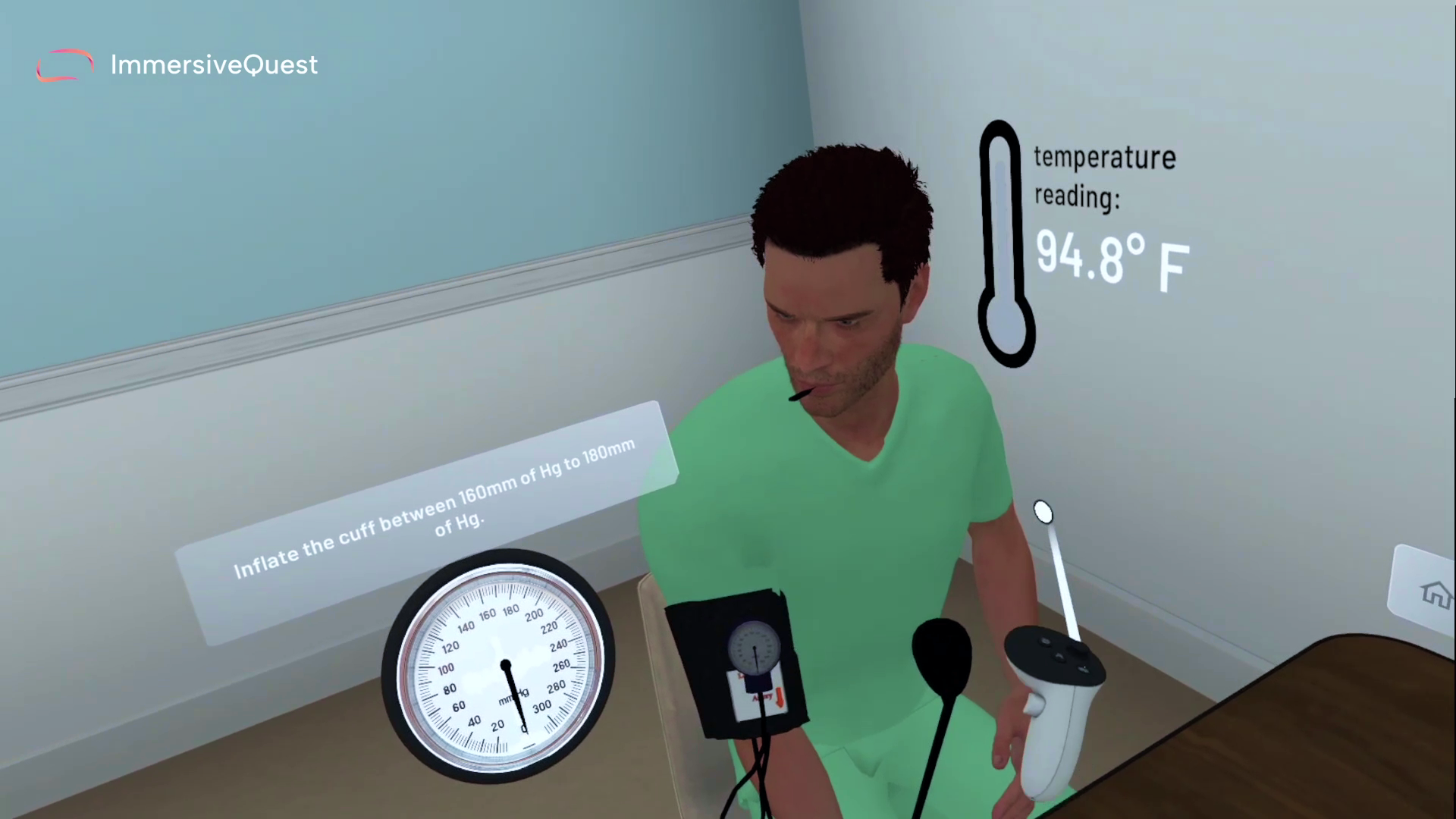
The ImmersiveQuest Vital Signs Training Module allows learners to practice in a realistic virtual setting, where clinical context is key.
Here’s how it works:
- Learners encounter patients with evolving conditions—like dehydration, fever, respiratory distress, or post-op complications.
- They must measure vital signs accurately using both manual and automated methods.
- Then, they must interpret the data, recognize abnormal patterns, and take the next appropriate step—whether it’s alerting the physician, administering oxygen, or initiating emergency protocols.
The module trains students to connect symptoms with clinical reasoning—an experience that’s difficult to achieve through textbooks or one-off practicals.
Realistic, Repetitive, Risk-Free Practice
What makes ImmersiveQuest different?
- Repetition with variation: Students can practice on multiple virtual patients, each with unique conditions.
- Immediate feedback: Learners see the consequences of delayed action or incorrect interpretation.
- Branching scenarios: Their decisions determine how the patient’s condition progresses or improves.
- Multi-sensory learning: Visuals, audio cues (like breathing difficulty), and tactile interaction reinforce memory.
This approach not only improves technical skills, but also sharpens clinical intuition—something textbooks alone can’t teach.
Empowering Learners with Clinical Confidence
By the time students enter a real hospital ward, they should feel ready. But many still hesitate when faced with critical signs they haven’t seen outside a textbook.
Our immersive training bridges that gap.
We train learners to recognize early warning signs like:
- A sudden drop in systolic BP
- A respiratory rate climbing above 24
- Pulse rate inconsistencies
- Subtle temperature spikes in immunocompromised patients
And more importantly, we teach them what to do next.
Preparing for Real Patients, Not Just Exams
It’s one thing to pass a skills check. It’s another to make the right call under pressure. Our goal isn’t just competency—it’s clinical readiness.
ImmersiveQuest enables learners to:
- React to critical changes in vital signs
- Prioritize patient care based on assessment
- Build confidence in fast-paced situations
- Make informed decisions, faster
Because in healthcare, hesitation can cost lives—and practice builds the confidence to act.
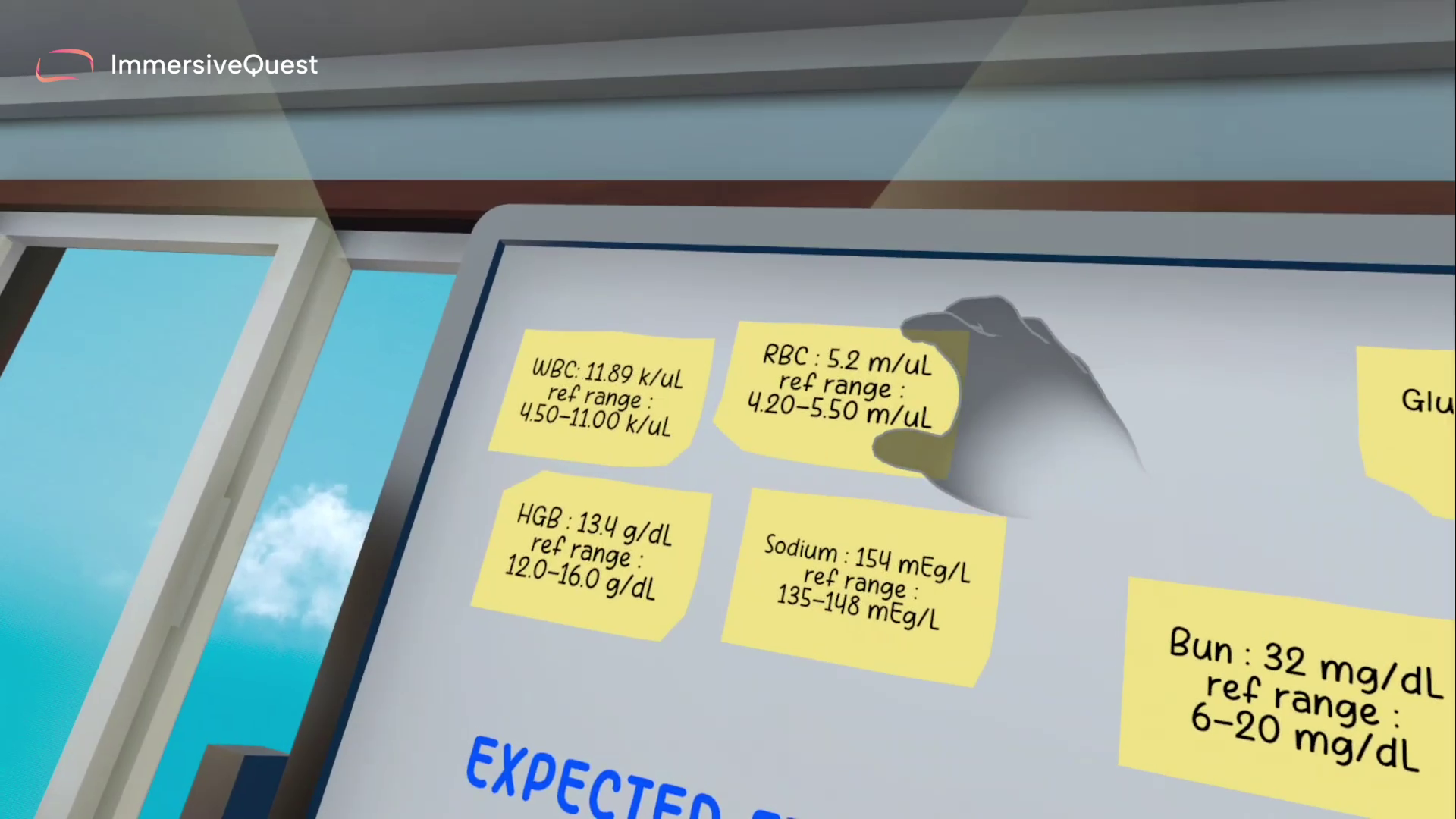
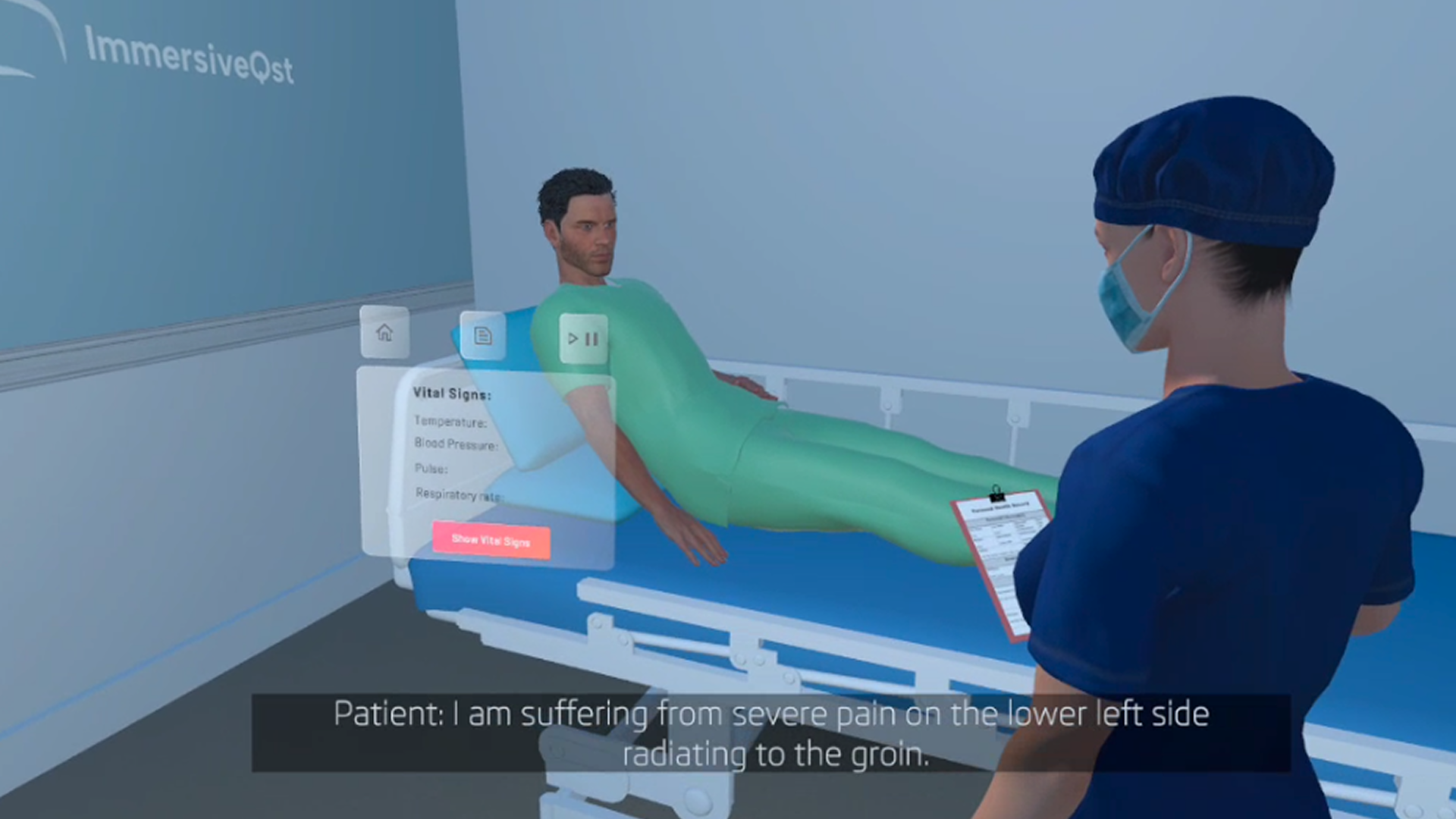
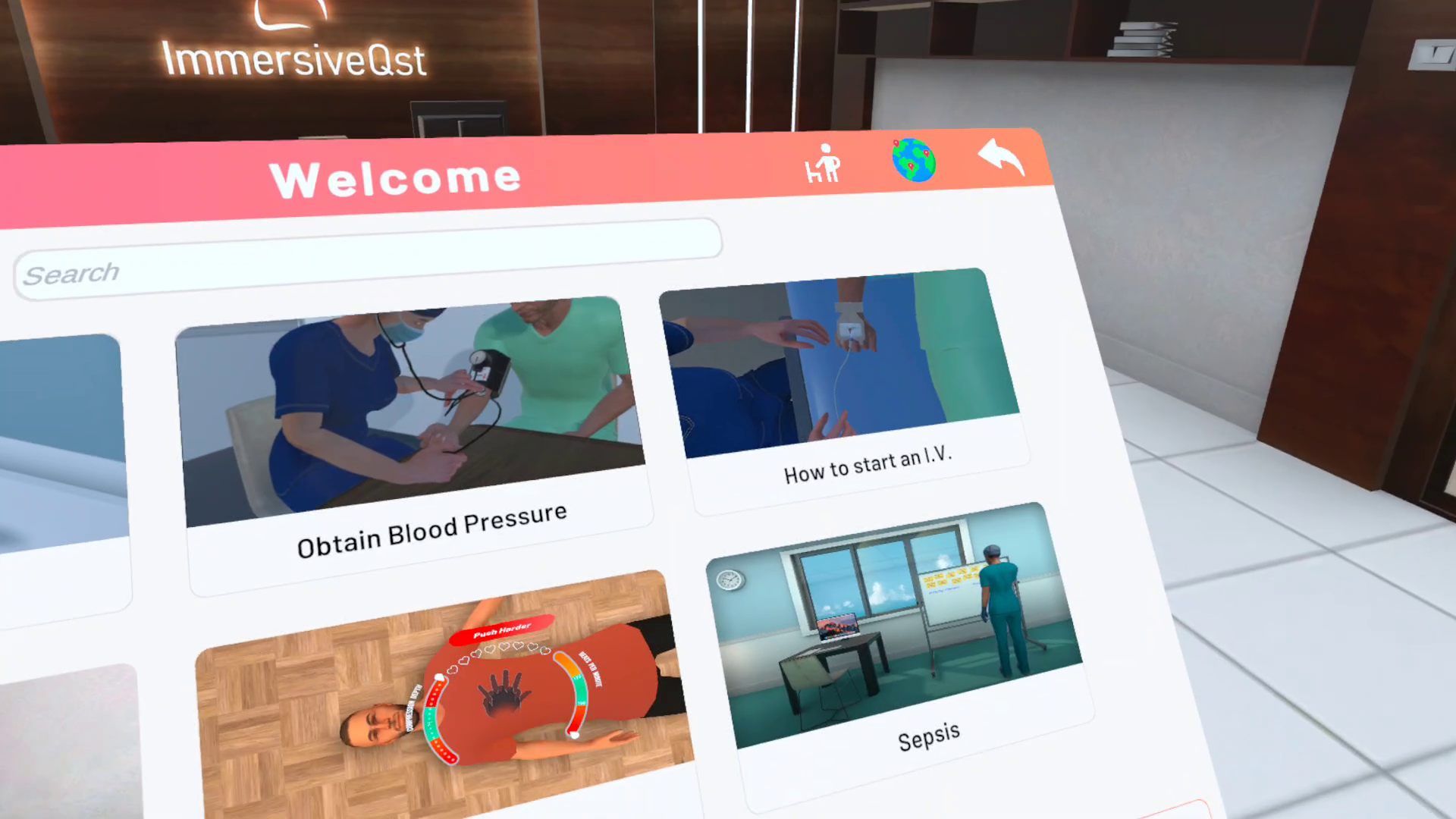
Blogs you might be interested
Free Virtual Training Session
Please get in touch with us and we would be happy to give you
a demo of our cutting edge product.


 USA
USA
4904 Kentwood Dr, Marietta,
GA 30068
 INDIA
INDIA
505 Crossroads Bhumkar Chowk Service Rd. Shankar Kalat Nagar Wakad - Pune 411057

- Follow us on
