
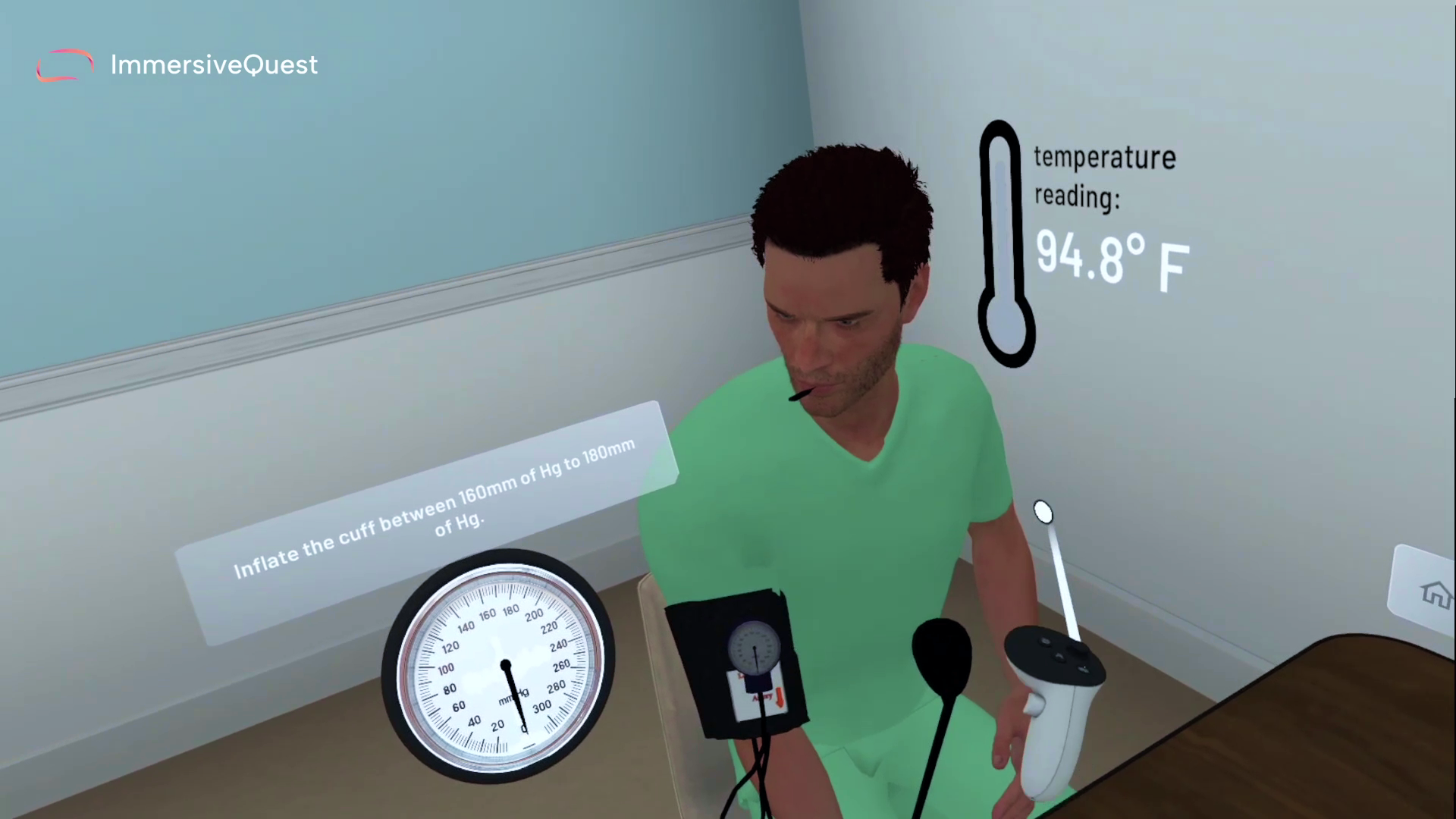
Blood Pressure Measurement_ The Subtle Skill That Saves Lives
In healthcare, some skills are dramatic and high-stakes—intubation, CPR, and surgical procedures. Others, like blood pressure measurement, seem routine, almost mundane. But don’t let the simplicity fool you.
Blood pressure measurement is one of the most frequently performed yet frequently misperformed skills in nursing and clinical practice. A small error—a cuff that’s too tight, a distracted observer, a patient not seated properly—can lead to inaccurate readings and, in turn, misdiagnosis, unnecessary treatment, or missed warning signs.
This is where Immersive VR training changes the game.
Why Precision Matters
Blood pressure isn’t just a number. It’s a window into the patient’s cardiovascular health. It guides:
Diagnosis of hypertension or hypotension
Dosing decisions for medications
Monitoring of chronic conditions like kidney disease or heart failure
Immediate response in critical care settings
When measured correctly, it helps prevent strokes, heart attacks, and organ damage. When measured incorrectly, it can mislead the entire clinical approach. That’s why ImmersiveQuest treats blood pressure measurement not as a task, but as a core clinical competency.
Common Mistakes in BP Measurement
Despite its frequency in healthcare settings, studies show that less than 40% of practitioners consistently follow the correct protocol for measuring blood pressure. Some of the most common mistakes include:
Using the wrong cuff size
Not allowing the patient to rest beforehand
Measuring over clothing
Poor arm positioning
Talking during the reading
Inadequate support for the arm or back
Each of these may alter the reading by 5-15 mmHg—enough to impact diagnosis and treatment decisions. That’s a major margin for error when dealing with something as sensitive as cardiovascular health.
How VR Reinforces the Right Technique
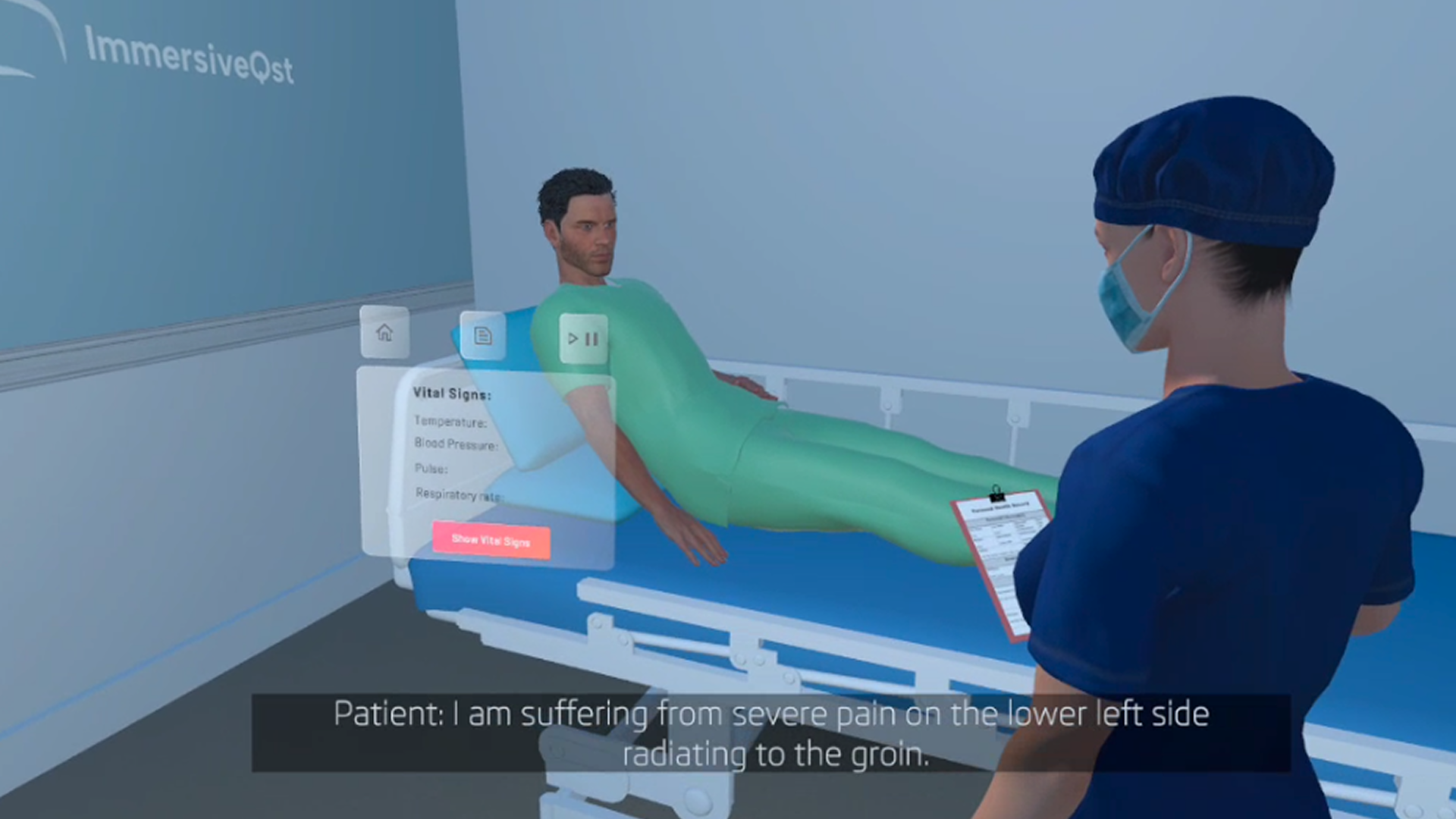
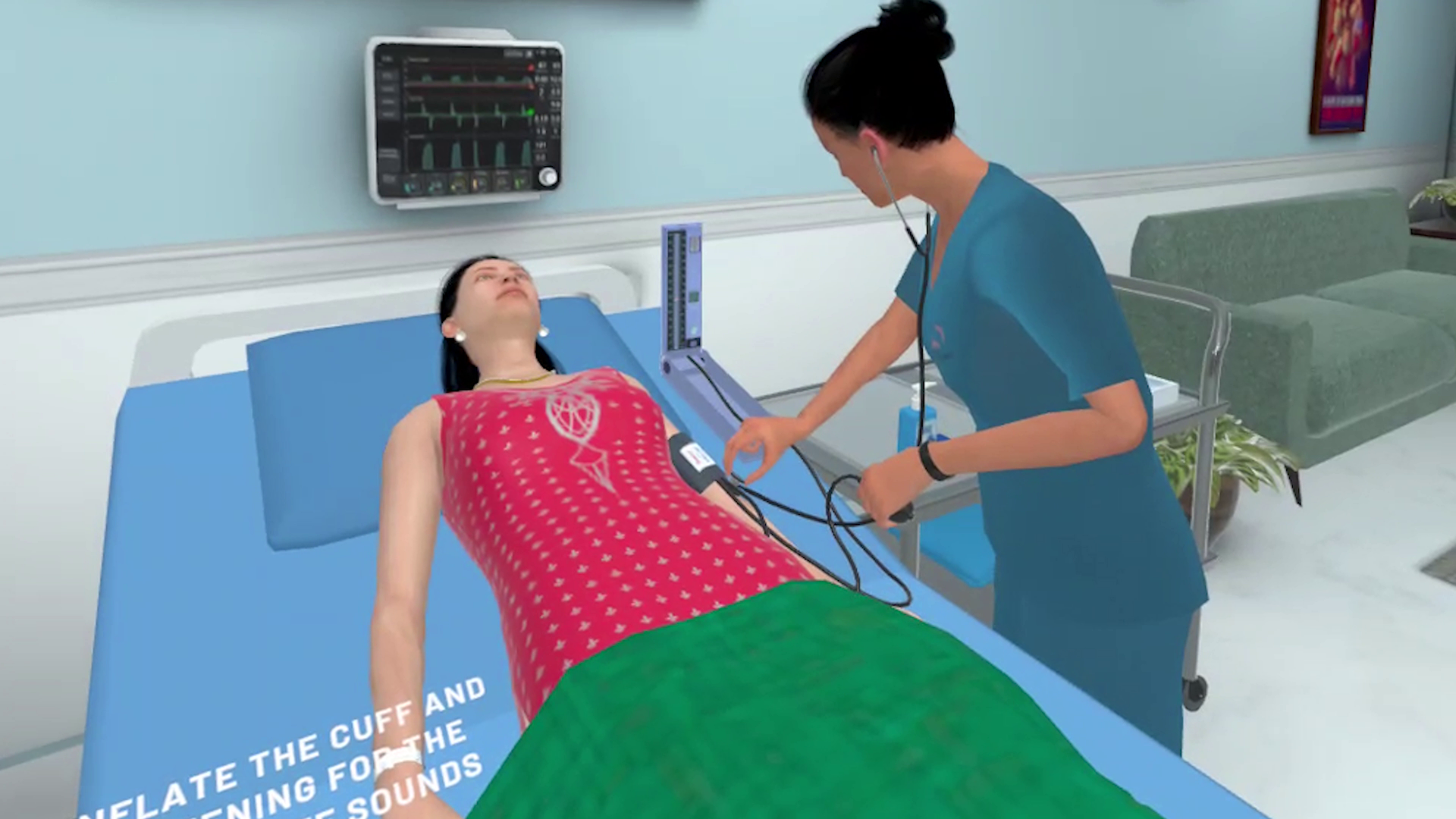
The ImmersiveQuest Blood Pressure Training Module was built to tackle these challenges head-on. We go beyond just telling learners what to do—we put them in a clinical simulation where they can practice the skill repeatedly, make mistakes, and receive real-time feedback.
Key features of the module include:
Step-by-step guidance through proper patient prep
Arm positioning and cuff sizing practice
Auscultation with realistic Korotkoff sounds
Differentiating between manual and automated measurement protocols
Scenario-based challenges (e.g. patient anxiety, movement, abnormal readings)
This hands-on approach gives learners a 360-degree view of blood pressure measurement—how to do it, how to troubleshoot it, and how to interpret the results.
Real-World Scenarios. Real-World Confidence.
We’ve designed our VR simulations to mimic actual clinical scenarios. For example:
A patient in pain who won’t stop talking
A poorly lit room that makes auscultation difficult
A manual BP kit with a faulty valve
Conflicting readings requiring clinical judgment
Instead of learning in a vacuum, trainees learn to think and respond like real healthcare professionals—because they’re immersed in realistic environments that demand decision-making under pressure.
A Skill That’s Easy to Learn—But Takes Practice to Master
Blood pressure measurement may look easy on paper. But true mastery comes from doing it again and again, until every movement becomes second nature. That’s exactly what VR provides—safe, repeatable, skill-building opportunities that no textbook or PowerPoint can replicate.
For nursing schools, hospitals, and training institutions, ImmersiveQuest offers a scalable way to ensure every trainee gets the same high-quality practice, regardless of instructor availability or physical equipment limitations.
The Outcome? Better Care. Fewer Errors.
When blood pressure is measured correctly, patients receive better care. Hypertension is caught early. Doses are adjusted safely. Emergencies are managed swiftly.
At ImmersiveQuest, we’re committed to transforming the way healthcare professionals are trained—from passive learning to immersive, hands-on experiences that stick.
Because in healthcare, the smallest details often make the biggest difference.
Blogs you might be interested
Free Virtual Training Session
Please get in touch with us and we would be happy to give you
a demo of our cutting edge product.


 USA
USA
4904 Kentwood Dr, Marietta,
GA 30068
 INDIA
INDIA
505 Crossroads Bhumkar Chowk Service Rd. Shankar Kalat Nagar Wakad - Pune 411057

- Follow us on
